Silicon Motion fell 15% on a memory rout; Q2 revenue rose 127% and Q3 prints October 28
Silicon Motion fell 15% on Thursday to $187.96 with no company-specific news, dragged by a memory-sector rout and AI-financing fears. Its controller business, a 15% dividend raise and Western Digital's 55% growth all point the other way, and Q3 results on October 28 will settle which was right.
 Richard Tang · 2 min read
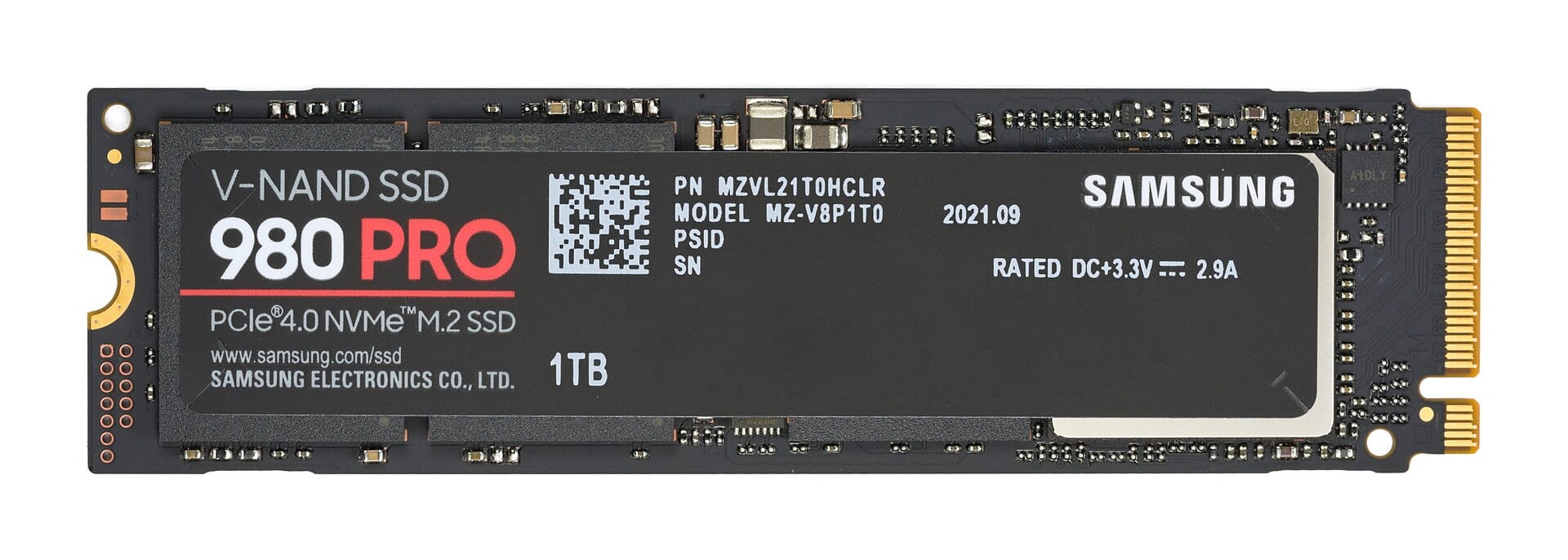
Silicon Motion+0.53% — Silicon Motion, up 0.53 percent today has spent two weeks being sold as if it made memory. It does not. The company designs NAND flash controllers, the chips that manage how data moves in and out of SSDs in servers, PCs and phones, and nothing in the selloff says anything about that business.
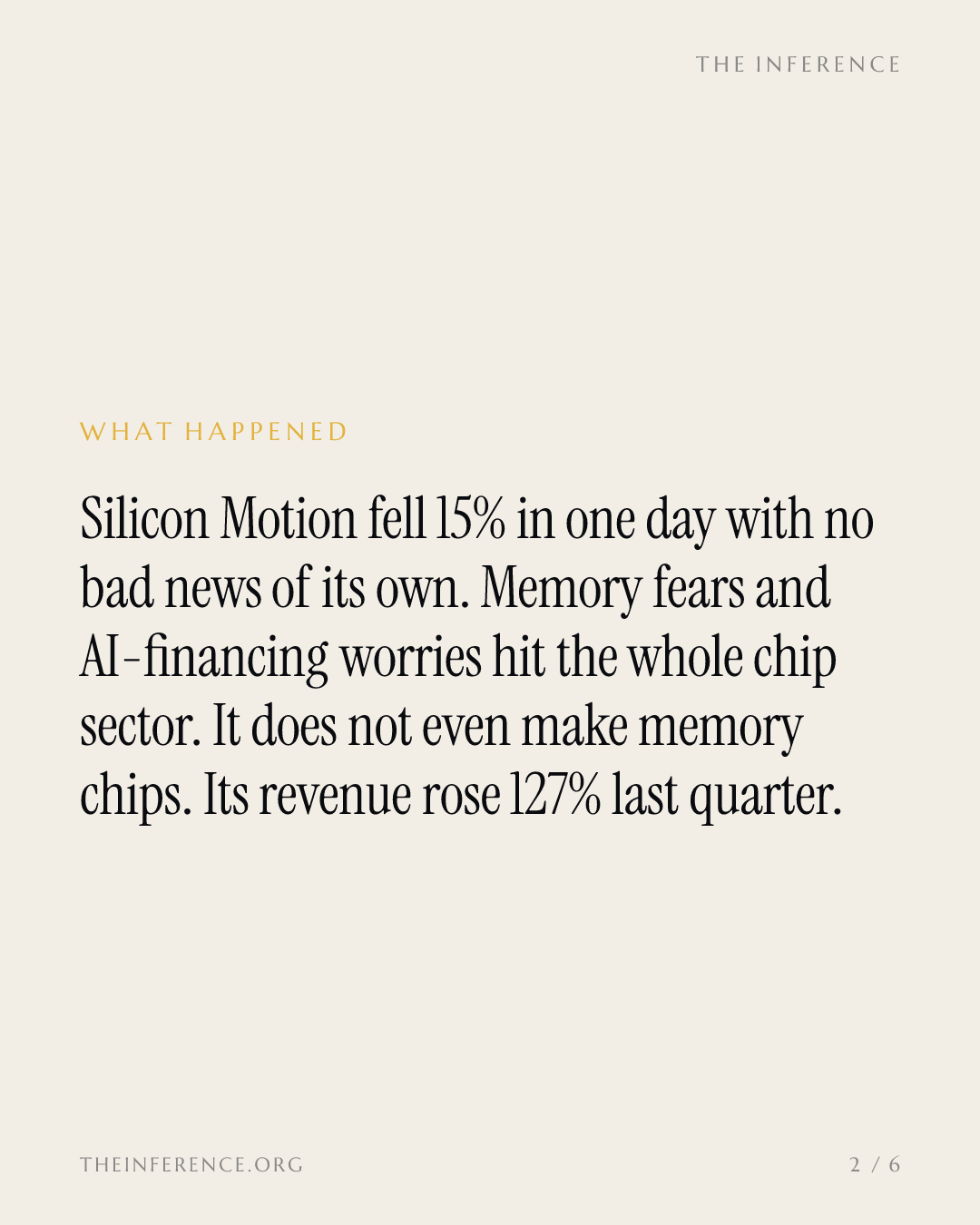
Two waves hit it. On October 16, fears that China's CXMT is advancing in 4F2 DRAM and DDR5 spread through memory names, and Kalkine reported there was no company-specific news at all 6. Then Huang's remarks on capital shortage stoked AI-financing fear and the Philadelphia Semiconductor Index fell about 6.7%; SIMO closed at $187.96, down 15.45%, roughly 40% below its June highs 18. That drop came on 247,947 shares against an 869,864 average day 2. Prices fell because buyers stepped away, not because holders rushed for the exit 2.
SIMO closed 44% below the analyst consensus target after the selloff
Data
| Value | |
|---|---|
| Close, Oct 22 | 187.96 |
| 52-week high | 336.9 |
| Consensus target | 341.43 |
The business underneath is not contracting
Last quarter revenue hit $451 million, up 127% year over year, beating consensus by a wide margin 2. The same morning the memory selling started, the company raised its annual dividend 15% to $2.30 per ADS, with CEO Wallace Kou saying the year is on track for record results 4.
About 70% of revenue is controller chips, which ride demand for storage rather than NAND prices themselves 5. And Western Digital just reported 55% revenue growth and guided well above consensus, which is the direct read on storage demand 7. Even Western Digital−1.93% — Western Digital, down 1.93 percent today could not hold its own beat, though: the stock fell anyway. That is the real signal in this tape. A good quarter no longer moves these stocks; only the financing question does.
Wednesday decides whether the repricing was sentiment
The test is fixed. Q3 results come after the close on October 28, with consensus at $3.30 EPS on $529 million in revenue 3. Analysts still carry nine Buy ratings, one Hold and a $341.43 consensus target 2. If the controller book prints strong and the stock decouples from the memory tape, the repricing was sentiment. If it does not, the market was onto something.
Watch Wednesday. Fear of how AI gets financed is a different problem from whether AI needs the storage. It does.
What happens next
SIMOWas the 15% repricing sentiment, or does the controller book weaken too?
The case for
Q2 revenue rose 127% year over year and beat consensus by a wide margin, and the dividend was raised 15% with the CEO calling for record results
The case against
A good quarter no longer moves these stocks; only the AI-financing question does, as Western Digital's post-beat drop shows
- Wednesday, October 28, after the closeSilicon Motion Q3 2026 results.
Get our follow-up when these land
Free. We'll email you when we publish on Silicon Motion, and send our free weekday newsletter. Unfollow in one click.