Super Micro passed its funding test: customers prepaid about $3.1 billion, but one is 44% of sales
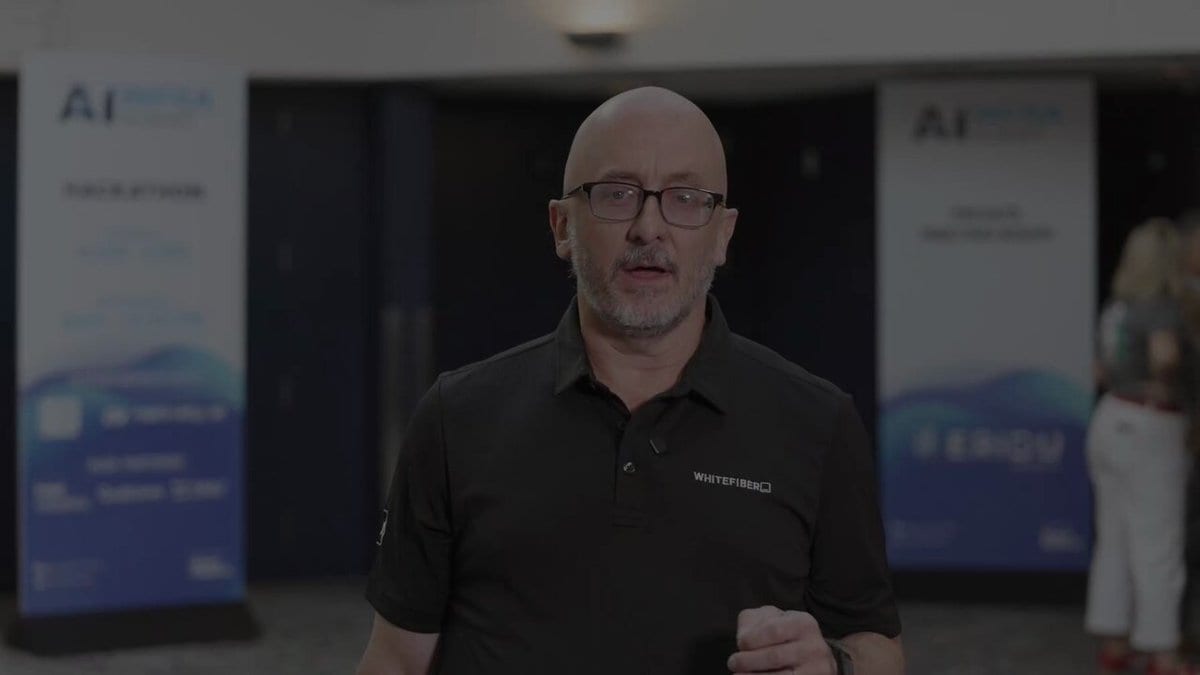
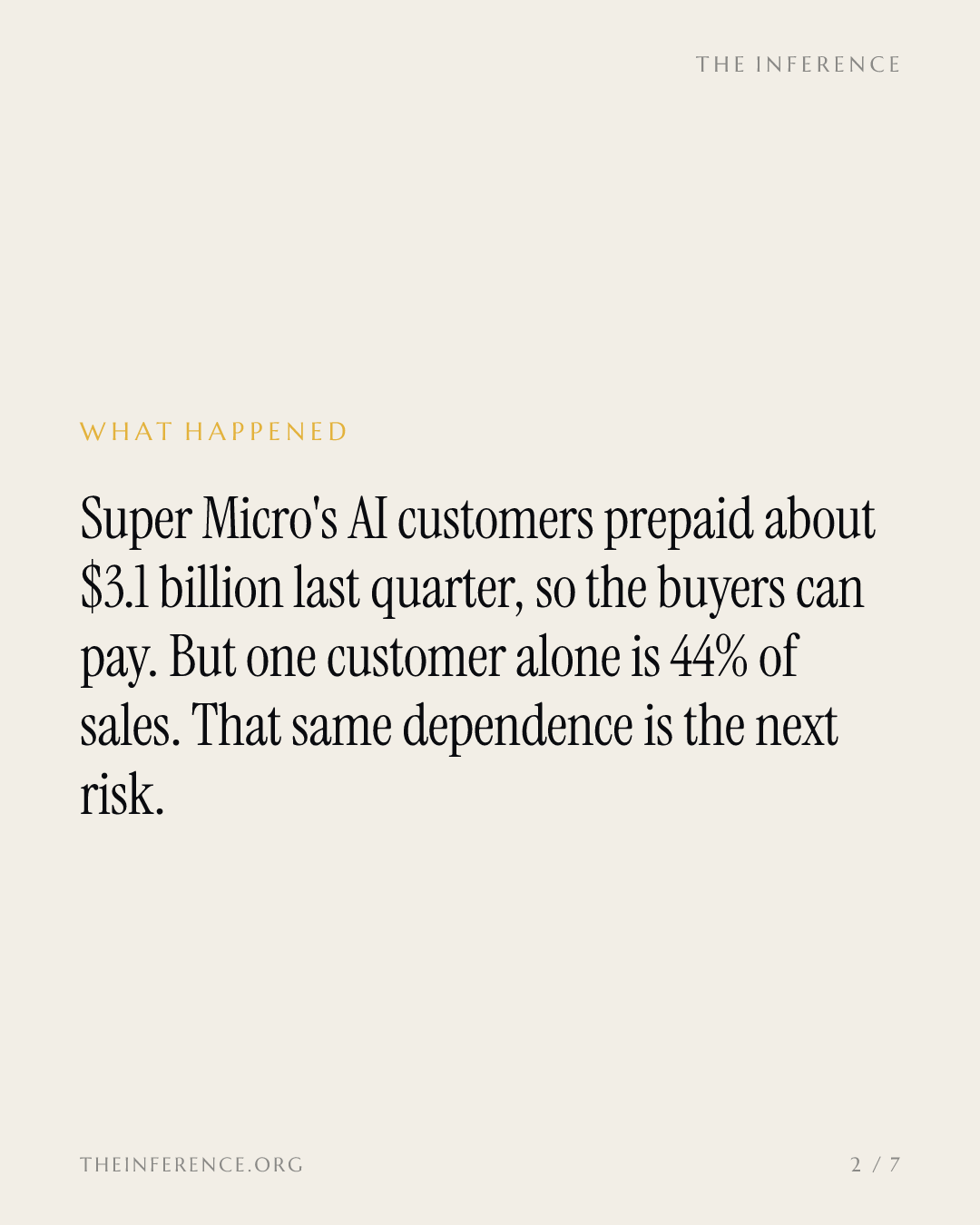
Customers paid Super Micro about $3.1 billion in advance last quarter, answering October's question of whether its AI buyers can fund their orders. The same report shows one data-center customer at 44% of sales, so the parties financing the boom are also the ones who could break it.
 Richard Tang · 3 min read

Super Micro's−5.64% — Super Micro, down 5.64 percent today first fiscal quarter, reported on November 3, 2026, answered the question its October preview set up: its large AI customers can pay, and most are paying before the hardware ships 1. Revenue reached $19.9 billion, nearly four times a year earlier, and the fiscal 2027 outlook rose to $72–82 billion, from $65–72 billion 19. Shares climbed 7% in after-hours trading 2. The growth is real. What holds it up is now the question.
Quarterly revenue stalled through 2025, then nearly quadrupled in a year
Revenue nearly quadrupled in a year; one customer is now 44% of it
Data
| Revenue | |
|---|---|
| Q3 '23 | $2.12B |
| Q4 '23 | $3.67B |
| Q1 '24 | $3.85B |
| Q2 '24 | $5.36B |
| Q3 '24 | $5.94B |
| Q4 '24 | $5.68B |
| Q1 '25 | $4.6B |
| Q2 '25 | $5.76B |
| Q3 '25 | $5.02B |
| Q4 '25 | $12.68B |
| Q1 '26 | $10.24B |
| Q2 '26 | $11.12B |
| Q3 '26 | $19.95B |
Customers are paying before delivery
Deferred revenue rose about $3.1 billion in the quarter, "an overwhelming majority" of it customers paying ahead of delivery, said Mark Long, the new chief financial officer 4. Days sales outstanding, the average time a sale takes to turn into collected cash, improved from 59 days to 36, helped by faster collections and by those same prepayments 4. The company recorded no material credit losses, and the prepayments funded most of the inventory build for coming quarters 4.
Customer prepayments were already compounding before the $3.1 billion quarter
Data
| Deferred revenue | |
|---|---|
| Q3 '23 | $0.34B |
| Q4 '23 | $0.38B |
| Q1 '24 | $0.44B |
| Q2 '24 | $0.42B |
| Q3 '24 | $0.56B |
| Q4 '24 | $0.6B |
| Q1 '25 | $0.67B |
| Q2 '25 | $0.73B |
| Q3 '25 | $1.03B |
| Q4 '25 | $1.3B |
| Q1 '26 | $2.14B |
| Q2 '26 | $2.61B |
Cash still flowed out: free cash flow was negative $481 million 1. The quarter also carried $2.3 billion of deployments delayed from earlier periods, which the new outlook does not assume repeats 1. Celestica−9.44% — Celestica, down 9.44 percent today, a rival data-center hardware maker, just cut its own 2026 free-cash-flow outlook to fund working capital for 2027 growth 7. Growth at this speed consumes cash before it produces it.
One customer is 44% of the quarter
The short case sits on the same page. One data-center customer supplied 44% of the quarter's revenue; for all of fiscal 2026 the largest stood at 28% 15. At quarter end, two customers held 49% and 17% of receivables 1.
Two customers held two-thirds of Super Micro's receivables at quarter end
- Largest customer4949%
- Second customer1717%
- All other customers3434%
Data
| Slice | Value | Share |
|---|---|---|
| Largest customer | 49 | 49% |
| Second customer | 17 | 17% |
| All other customers | 34 | 34% |
The controls are deposits on large deployments, credit checks before committing capacity, and a $1.8 billion facility that sells receivables 1; Long said the company has declined business on terms it was not comfortable with 4. Non-GAAP gross margin fell to 12.8% from 17.6% in one quarter, and the full-year guide of 11.8–12.2% points to a weaker second half as the AI share of sales climbs 1.
Gross margin fell 4.8 points in one quarter, and the full-year guide points lower still
- Non-GAAP gross margin
- Estimate
Data
| Non-GAAP gross margin | |
|---|---|
| Q4 FY26 | 17.6% |
| Q1 FY27 | 12.8% |
| FY27 guide (estimate) | 12% (11.8–12.2%) |
Bulls see a $20 billion market cap on a raised outlook
Bulls read the same numbers differently. The market valued the company at about $20 billion at the close, against an outlook it had just raised 6. Nicholas Mugalli, chief investment officer at World Trade Securities, kept an Overweight rating and a $45 target and called the quarter "one of the best prints of the season" 3.
The bottleneck has moved to power and land
Both ends of the supply line say demand is not the constraint. Lisa Su, chief executive of chipmaker AMD+0.08% — AMD, up 0.08 percent today, told analysts the same evening that 2027 revenue could grow more than 80% 3.
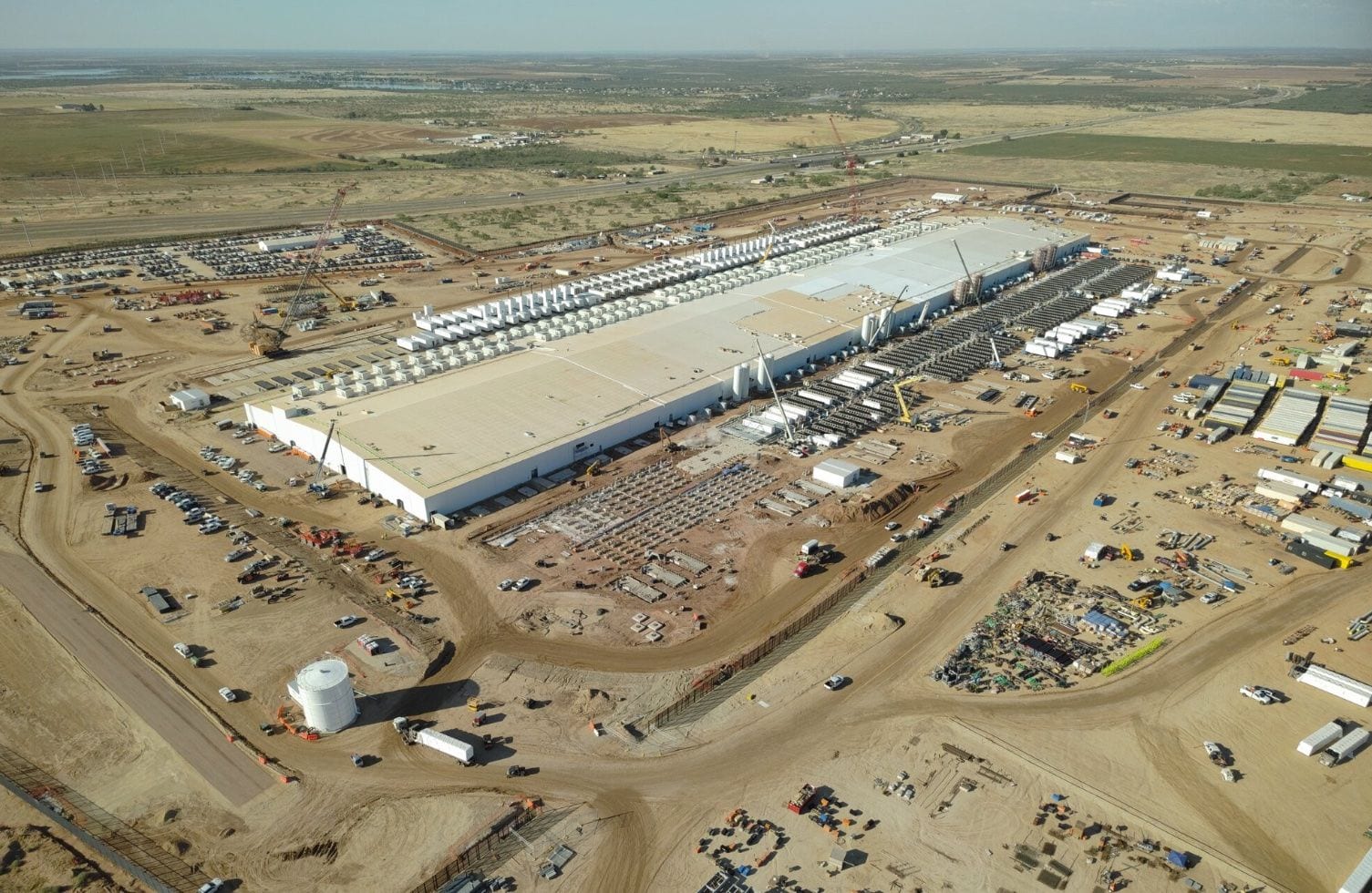
Long put Super Micro's limit plainly: what governs the outlook is "not demand" and not its ability to build, but "land, power and data center shells" 24. A single deployment can now exceed a year-ago quarter's entire revenue 2. One quarter of prepayments is observed; whether a handful of counterparty balance sheets keep prepaying as the orders grow is the projection.
Concentration becomes credit risk if prepayments slow
The customers funding this buildout and the customers who could break it are the same parties. Next quarter's check is the receivables balance: if it keeps growing faster than revenue while prepayments slow, the biggest customers are stretching payment, and concentration has started turning into credit risk.
Get Data Center by email, free
Who is building AI's data centers, and who is paying for them. In our daily email, every weekday.