Tower's Innolight filing says the AI optics silicon is still in its fabs; the tape disagrees
A 6-K filed November 3, 2026, puts Innolight's first near-package optics device into production inside Tower's fabs, hours after the foundry printed record results and its stock fell 6.70%. The filing says the silicon is still made by Tower; the market is pricing in a rival foundry winning the same customer's chips.
 Vincent Jiang · 3 min read
On November 3, 2026, Tower Semiconductor+4.70% — Tower Semiconductor, up 4.70 percent today filed a 6-K with the SEC that no wire had picked up: Innolight, the world's largest maker of data-center optical transceivers, has its first near-package optics device in early production on Tower's PH18M silicon photonics flow, with more NPO products taped out on Tower's 300mm platform 1.
The filing landed the morning after Tower printed the best quarter in its history and its stock still closed down 6.70% at $155.32 3. The market's worry is not the numbers; it is that UMC, the Taiwanese foundry, has reportedly won photonic integrated circuit orders from that same customer, Innolight, and from Tencent-backed SILITH, at seven times conventional CMOS pricing 5.
What the new optics shift means for Tower
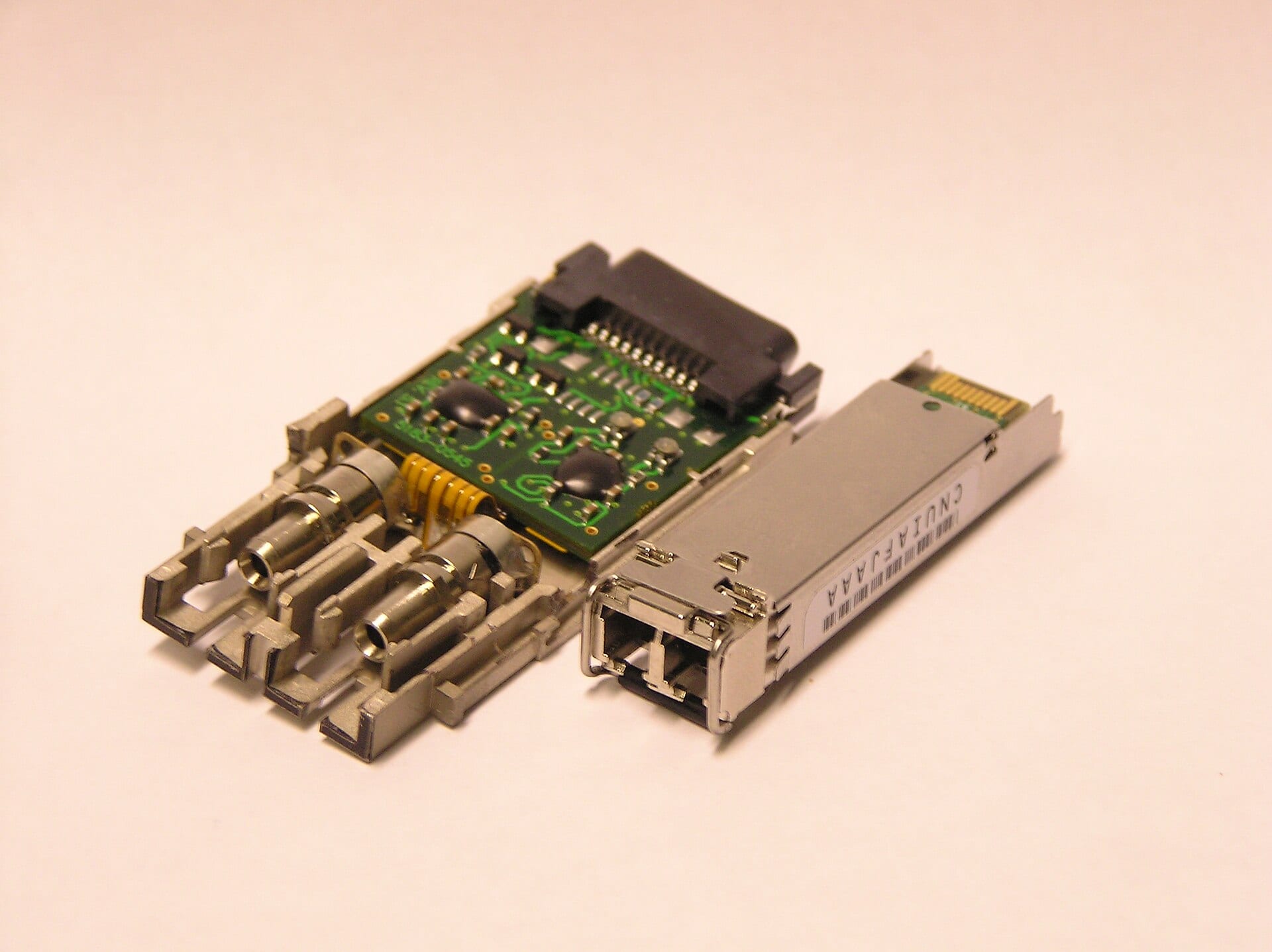
NPO is the step after pluggable optics, the modules that link AI servers today. An NPO device integrates 16 or more optical channels on one die and typically replaces the digital signal processor with silicon-germanium amplifiers and drivers 13. That moves more silicon content into the foundry.
Tower says most analysts see NPO doubling the optical transceiver market, and it is prototyping NPO with more than ten of its top customers 3. Innolight's CTO called NPO "a key technology for next-generation AI and cloud infrastructure" 1.
The receipts, and the gap
The quarter behind the filing: revenue of $526 million, up 33% year over year; record net profit of $120 million at a 23% margin; Q4 guided to $600 million, closing 2026 at $2 billion with a $2.4 billion exit run rate 2. Silicon photonics ran about $240 million in Q3, targeted at a $1.1 billion annualized rate in Q4, five times 2025 23.
Photonics is guided from about $240 million a quarter to $700 million by Q3 2027
- Quarterly silicon photonics revenue
- Estimate
Data
| Quarterly silicon photonics revenue | |
|---|---|
| Q3 2026 | $240M |
| Q4 2026 (annualized) (estimate) | $275M |
| Q3 2027 target (estimate) | $700M |
Customers prepay: advances rose $305 million over nine months, cushioning $191 million of quarterly capex against $185 million of operating cash flow 2. Capacity roughly doubles by year end, triples with Japan's Track-1, and is "spoken for" through contracts extended to 2029 3.
Record Q3 revenue of $526 million, guided to $600 million next quarter
- Quarterly revenue
- Estimate
Data
| Quarterly revenue | |
|---|---|
| Q3 2025 | $396M |
| Q2 2026 | $460M |
| Q3 2026 | $526M |
| Q4 2026 guide (estimate) | $600M |
What the sellers are pricing
Here is the tension. UMC's reported win means Tower's cornerstone customer is also buying from a rival; UMC would not comment 5. Q3's gross margin came in near 34% against Tower's own updated model of 45%, a gap the company bridges partly with price increases of up to 20% 34. Wedbush cut its price target on November 3 citing market headwinds 6. CEO Russell Ellwanger, asked about the nearly 50% fall from the summer share-price peak: "There has been no change in demand, nor are there any headwinds" 4.
The bet is narrow and checkable: whether NPO keeps its silicon inside Tower's fabs, and whether gross margin walks toward 45% 34. The next readings are Q4 results and the company's own target of roughly $700 million of quarterly photonics revenue by Q3 2027 34.
Get Chips by email, free
How AI demand is reshaping chipmakers, memory and the fabs behind them. In our daily email, every weekday.