Chips

Groq raises $650 million with no valuation disclosed to buy Nvidia-branded racks of its own chip

Nvidia sells Groq's design as its own rack with Nebius as first customer, while the founderless Groq raises $650 million at a valuation nobody will name to run the same silicon in its own cloud.

Vincent JiangVincent Jiang · 2 min read
Share
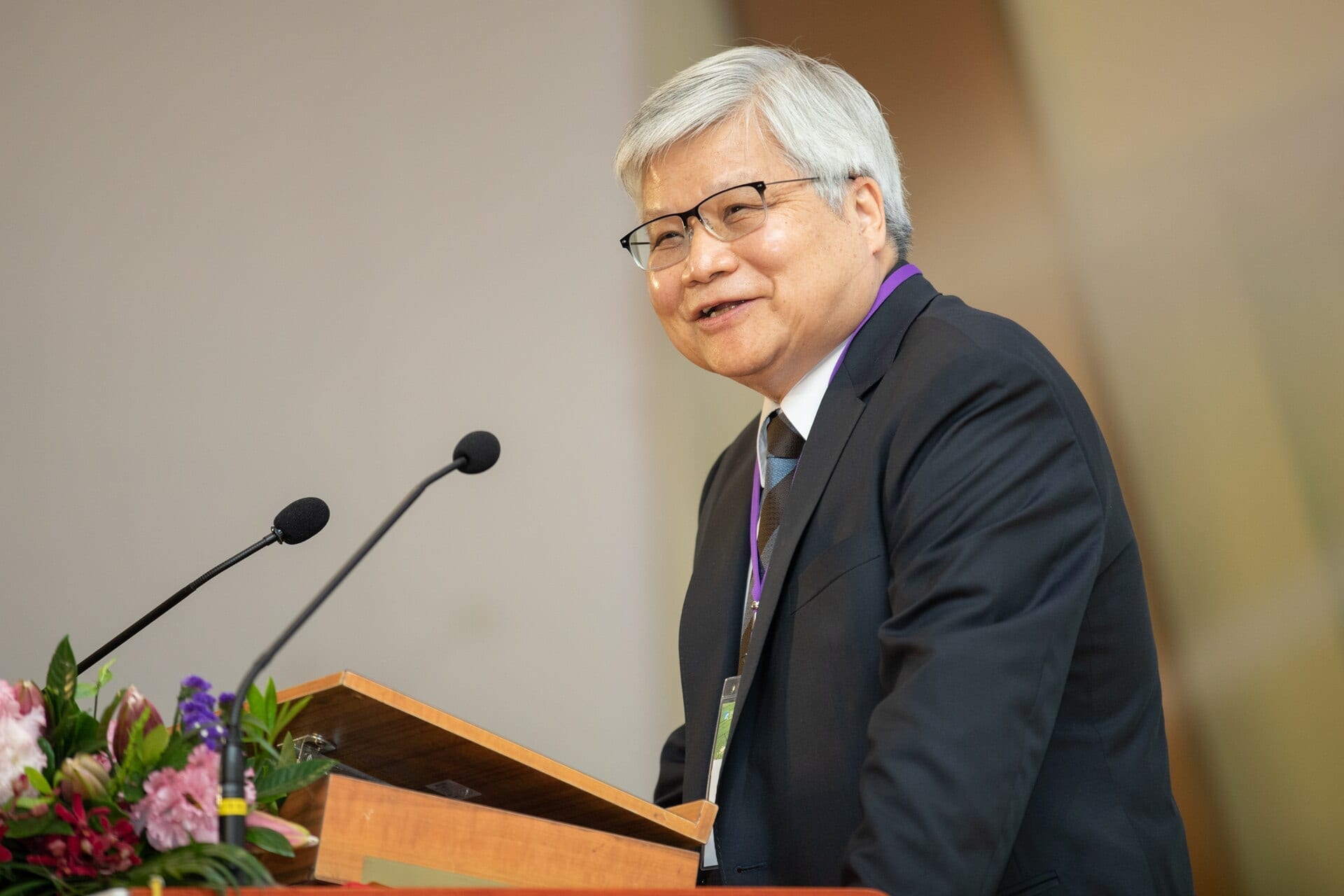
Jonathan Ross, Groq's founder and former chief executive, at the World Economic Forum's annual meeting in Davos in 2025
1 / 6Slide 1 of 6
Groq founder Jonathan Ross at Davos in 2025. He left for Nvidia with other senior Groq executives in the $20 billion licensing deal, leaving the company founderless as it raised $650 million with no valuation disclosed.

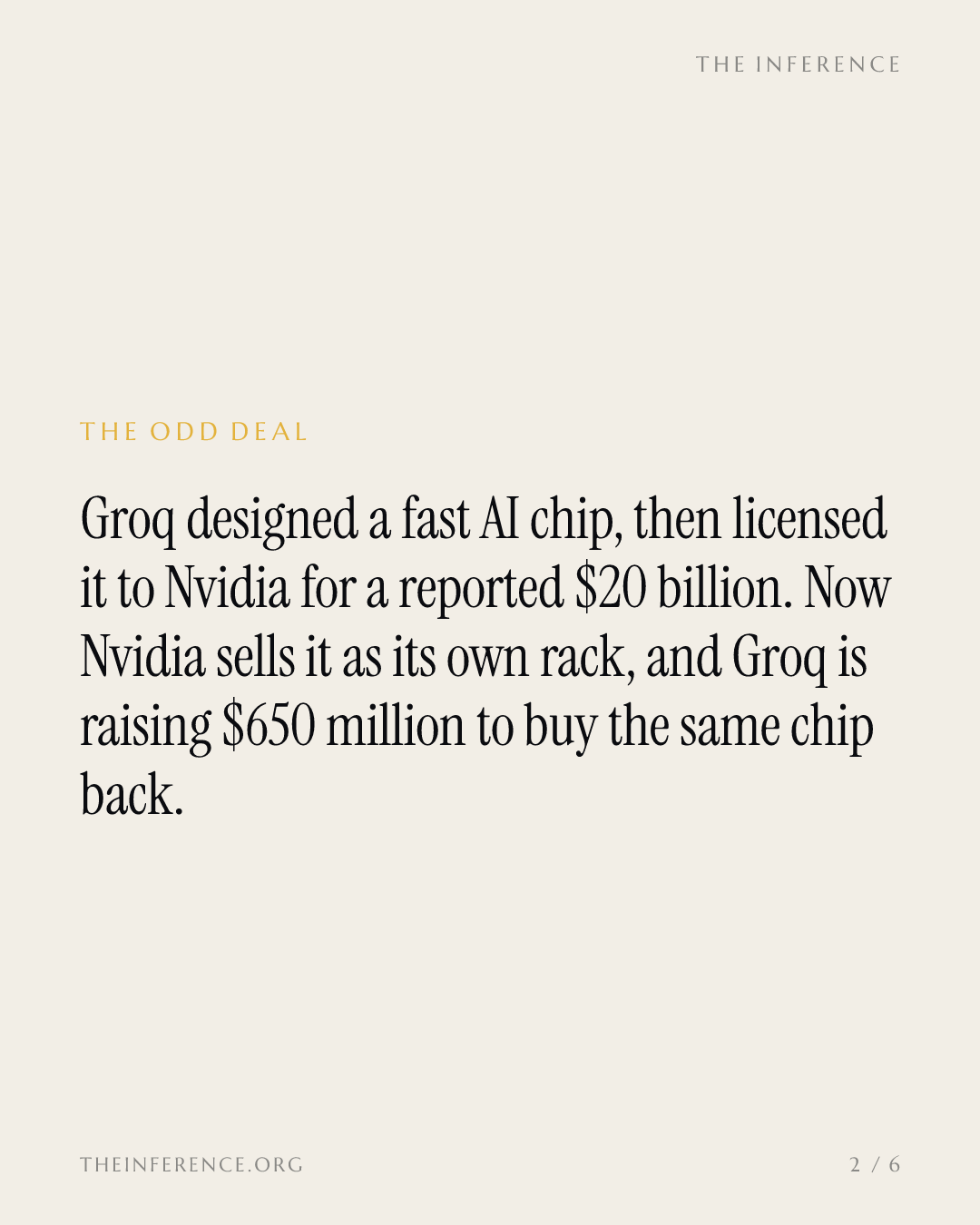
Groq$3.5B — Groq, private, latest valuation $3.5B designed the LPU, a processor built for one job: generating AI tokens fast. In December 2025 the company confirmed a $20 billion non-exclusive license to Nvidia, and founder-CEO Jonathan Ross plus other senior executives left for Nvidia−4.13% — Nvidia, down 4.13 percent today 3. The chip did not fail; its route to the customer changed.

Nvidia now sells the chip Groq built, and Groq buys it back

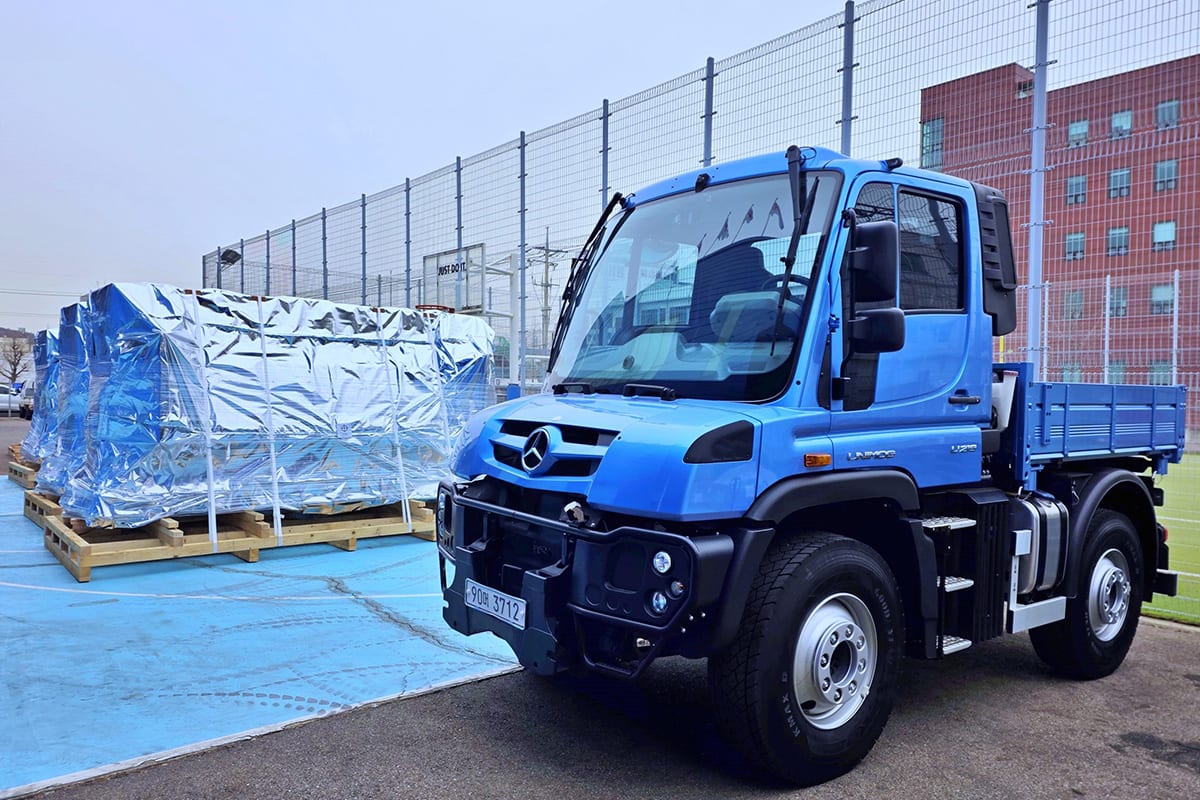
Nvidia's Groq 3 LPX rack packs 256 Groq 3 LPUs with 128GB of on-chip SRAM, reached full production by August 2026, and counted cloud operator Nebius−6.89% — Nebius, down 6.89 percent today as its first customer 3. Nvidia's published benchmark shows 3,400 output tokens per second on Gemma 4 31B at a 100K-token context, a vendor test, not independent verification 2. Dell handles delivery and integration 2. Meanwhile GroqCloud, the part that stayed independent, will retrofit its own sites with the same silicon under Nvidia's brand 1.

The $650 million round has a visible conflict of interest

The round was led by Disruptive, founded by Alex Davis, who also chairs Groq's board, alongside hedge fund Infinitum; no valuation was disclosed 14. TechCrunch reported the announcement in June 2026, when Groq's last private mark stood at $6.9 billion from a September 2025 round 4. The money funds a target of 200 megawatts of inference capacity by the end of 2027 across 13 data centers, serving more than 5 million developers moving trillions of tokens weekly 1. Targets are plans, not capacity online.

Nvidia's license price dwarfs Groq's last private mark and its nearest peer's

05101520Nvidia license for Groq tech$20BGroq last valuation (Sep 2025)$6.9BTenstorrent Series E valuation$6.2B
Data
Value
Nvidia license for Groq tech$20B
Groq last valuation (Sep 2025)$6.9B
Tenstorrent Series E valuation$6.2B
US dollars, billions. Nvidia license and Tenstorrent valuation per TEXXR (texxr.com, 2026); Groq's last valuation from a September 2025 round per TechCrunch (June 22, 2026).3,4

The record before the license explains the urgency

In July 2025, Groq cut its 2025 revenue projection from more than $2 billion to more than $500 million, citing data-center capacity delays 3. A cloud cannot sell capacity it has not built. That shortfall is what the new capital is racing to fix.

What to watch

Readers of our earlier pieces on the Delaware fight to reprice Nvidia's license know the open question: who controls manufacturing allocation and pricing. Groq's own cloud buying Nvidia-branded racks makes that fight worth following. The unnamed valuation is the tell.

First-time readers: the LPU (language processing unit) is an inference chip, and inference is the step where a trained model answers. Related reading linked below.

Get Chips by email, free

How AI demand is reshaping chipmakers, memory and the fabs behind them. In our daily email, every weekday.
Loading NVDA…

Reader comments

0 comments

    Chips

    Micron names Hanmi Semiconductor a top supplier again, countering Morgan Stanley's HBM bonder sell case

    Micron named Hanmi Semiconductor a top supplier for the second straight year, the only Korean company on a list with Applied Materials and Lam Research. With the third-quarter print due November 6, the customers' own verdict is now the strongest counter to the sell case.

    Chips

    TSMC surveys suppliers on rare-earth-free motors; every fab motor needs a China license

    TSMC sells the world's most advanced silicon and claims it can build fabs anywhere. The first crack in that story is a magnet: the motors inside its automation depend on parts Beijing licenses, and the fix has no cost and no timetable.

    Chips

    CXMT guides to 132.5 billion yuan in nine-month profit, then its stock falls 7.8%

    CXMT, the Hefei-based DRAM challenger, guided its first results since July's IPO to as much as US$19.8 billion of nine-month net income, against a 5.3 billion yuan loss a year earlier. What the filing cannot show is whether its 16-nanometer DRAM can pass a server customer's tests.

    Chips

    Navitas says its 2030 market is over $8 billion; it guides just $13.5 million for the quarter

    At its Navitas 2.0 call the power-chip maker tripled its identified 2030 market to more than $8 billion, while its quarterly revenue guidance sits at $13.5 million and its cash burn is covered by selling stock. November 3 picks the storyline.

    Chips

    Nvidia prepays for packaging capacity; SUSS MicroTec's record backlog ships only 240 million euros

    Nvidia is prepaying for capacity and Besi says deliveries are slipping into 2027. SUSS MicroTec's record order book only converts to revenue if about 240 million euros ships in the second half, and the third-quarter report on November 5 decides it.

    Chips

    Teradyne reports October 27 with a guide below its $1.33 billion record

    FormFactor closed the $300 million placement on October 20, Teradyne's robots took the GTC Berlin stage on October 21, and the Texas probe-card plant opened October 22. On October 27 Teradyne must show whether a quarter guided below its last print is caution or a cooling cycle.

    Get the newsletter

    The day's AI and market news, in your inbox every weekday.