Nordic Semiconductor's record $235 million quarter falls 1.82% as Google and Synaptics target its sockets
Nordic Semiconductor printed record revenue and a thirtyfold profit jump on October 22, and its shares fell anyway. Two days earlier Google Research and Synaptics launched AI compute for Nordic's sockets, and the beat no longer answers the question investors are asking.
 Richard Tang · 3 min read
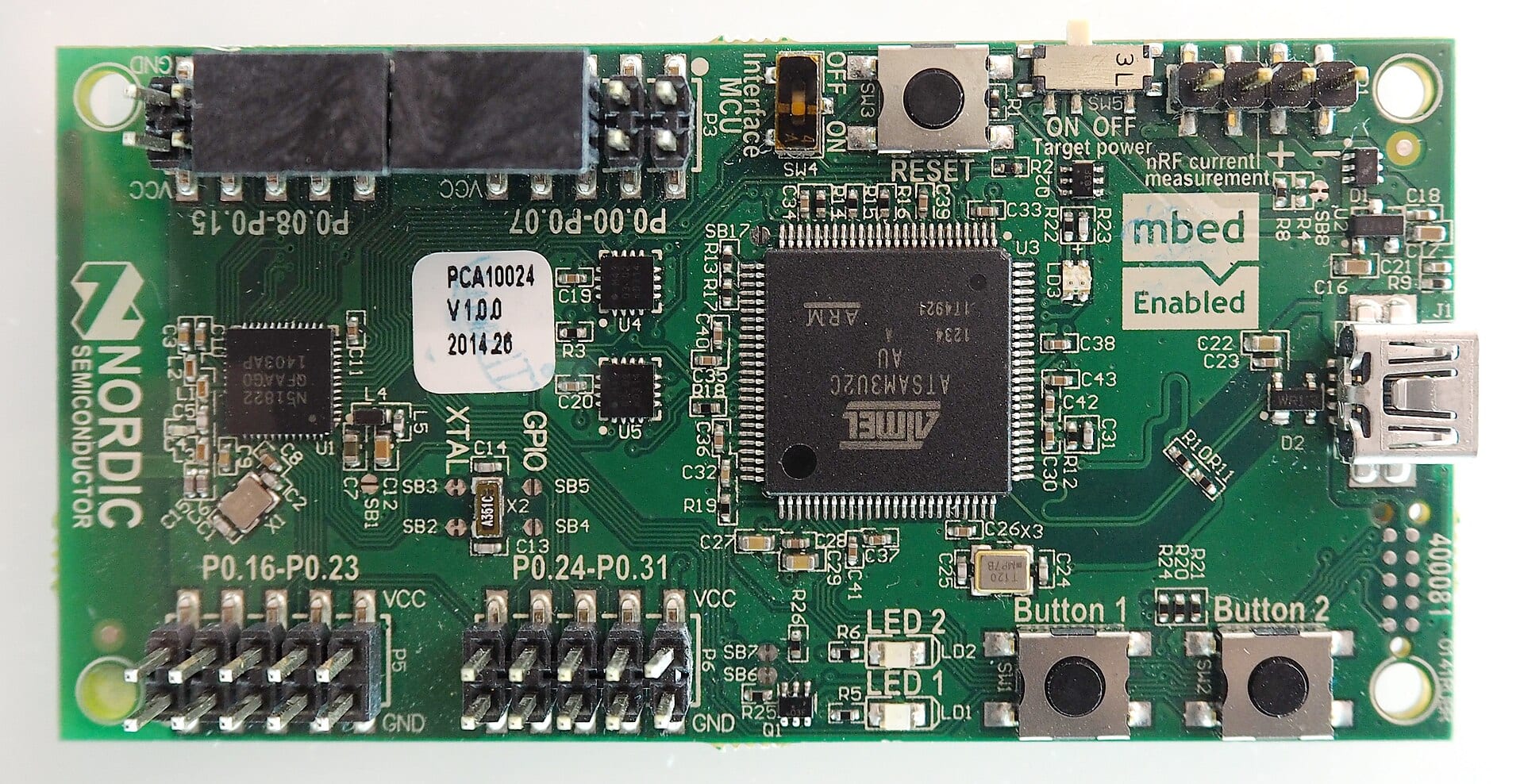
Nordic Semiconductor printed its best quarter ever this morning and its shares still closed down 1.82% at 173.00 NOK 4. The market paid less for the stock on the day of a record because two days earlier, on October 20, Google Research and Synaptics launched chips aimed at exactly the sockets Nordic's Bluetooth Low Energy radios sit in 5. The beat settled whether demand is real. It did not settle whether the radio will still be the reason anyone buys the board.
The print itself is strong. Third-quarter sales hit a record $235.47 million, up from $178.97 million a year ago, and net income jumped to $26.86 million from $0.852 million, a year in which Nordic earned essentially nothing 1. Reuters called it a revenue beat 3, and the company's slides headline record revenue alongside a claimed 30% market share 2. For the nine months, $646.48 million of sales produced $53.93 million of profit, so roughly half of this year's earnings landed in this one quarter 1.
Nordic's record quarter: revenue up 31%, profit up more than thirtyfold
- Revenue
- Net income
Data
| Revenue | Net income | |
|---|---|---|
| Q3 2025 | $178.97 | $0.85 |
| Q3 2026 | $235.47 | $26.86 |
The rival moved first, two days before the print
On October 20, Synaptics−0.22% — Synaptics, down 0.22 percent today and Google formalized the Astra SR200 Series, an "AI-native xMCU" family built on Google's−3.77% — Google, down 3.77 percent today open-source Coral NPU architecture 5. It ships at 200, 300 and 400 GOPS for AI wearables, battery-powered sensors, connected cameras and industrial vision, with pin compatibility across the three tiers so one board design can carry a whole product range, and some configurations run multimodal inference without external DRAM, cutting the power draw that decides battery life 5. Developer boards were orderable at DigiKey that same day 5. Those are Nordic's device classes.
Three tiers, one board design: the SR200 ships at 200 to 400 GOPS
Data
| AI compute | |
|---|---|
| SR200-200 | 200 GOPS |
| SR200-300 | 300 GOPS |
| SR200-400 | 400 GOPS |
If the buying criterion shifts from which low-power radio to which on-device AI compute, Nordic's franchise risks becoming the commodity half of the board, and 30% of a commoditizing socket is worth less than 30% of a decisive one.
What Nordic said, and what it did not
The Q3 materials answer the demand question, not the roadmap one 24. What they cover is positioning: the slides claim the 30% share 2, and the sell side had already lined up, with SB1 reiterating buy in September expecting a Q3 above consensus and Barclays−2.74% — Barclays, down 2.74 percent today raising its target in August 4. What the slides and the transcript as collected do not carry is a public edge-AI counter to the SR200's pitch 24.
That gap is now the question investors price. Nordic's next disclosure settles it: if the Q4 guidance, due with the year-end print, names AI-capable silicon or a response to licensable NPU architectures, the record quarter keeps its premium; if the guidance covers revenue and share alone, the stock's 29.78% run this year depends on the market not asking again 4. Watch the wording of that guidance, not the revenue line.
Get Chips by email, free
How AI demand is reshaping chipmakers, memory and the fabs behind them. In our daily email, every weekday.