Three quarters of Google's 3.6-gigawatt Constellation nuclear deal is power that already exists
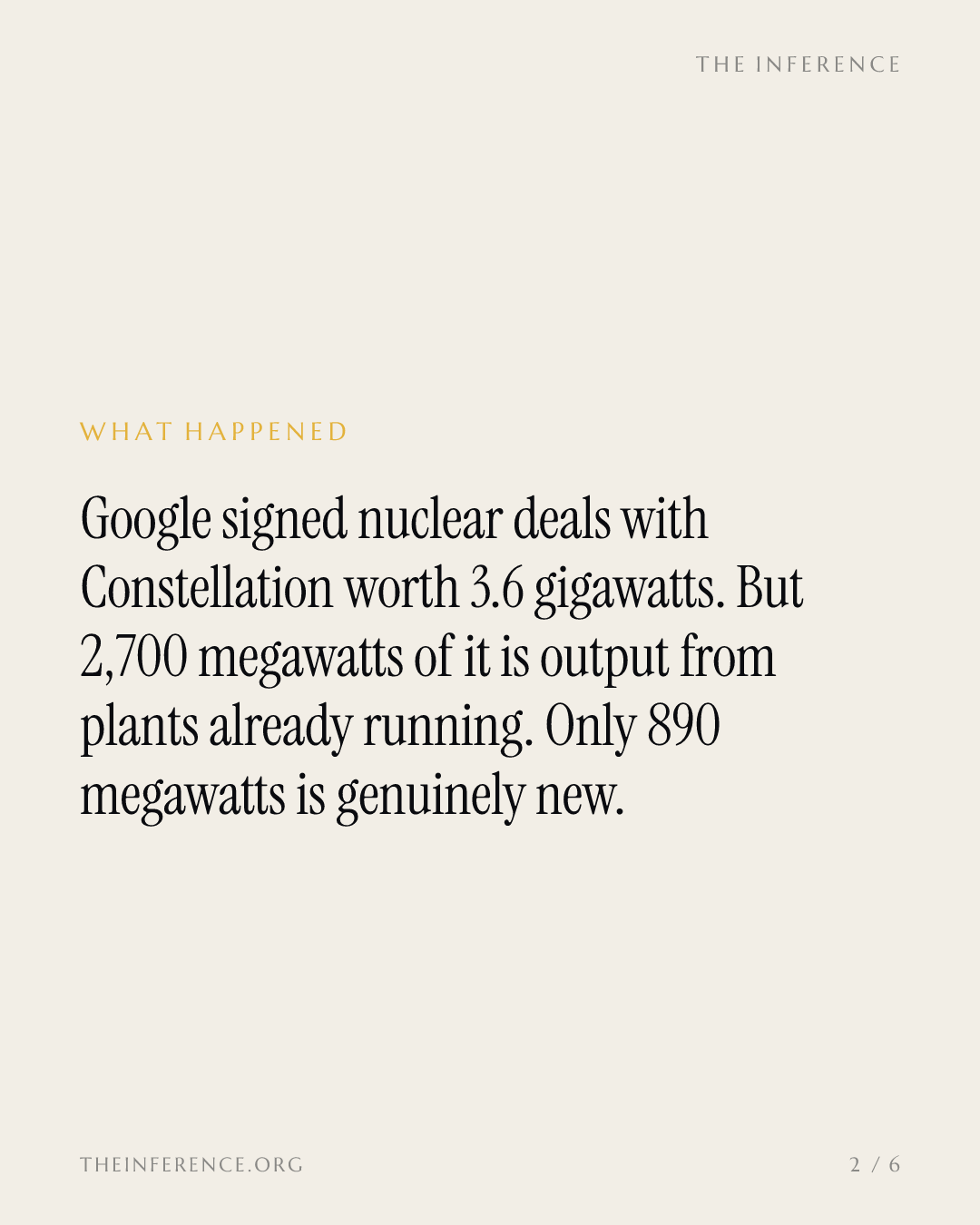
The October 6 agreements split into 890 MW of new reactor uprates and 2,700 MW of existing output Google holds for 15 years, in a grid whose capacity auctions have cleared at the price cap three years running.
 Vincent Jiang · 3 min read
The 3.6 gigawatts is two contracts
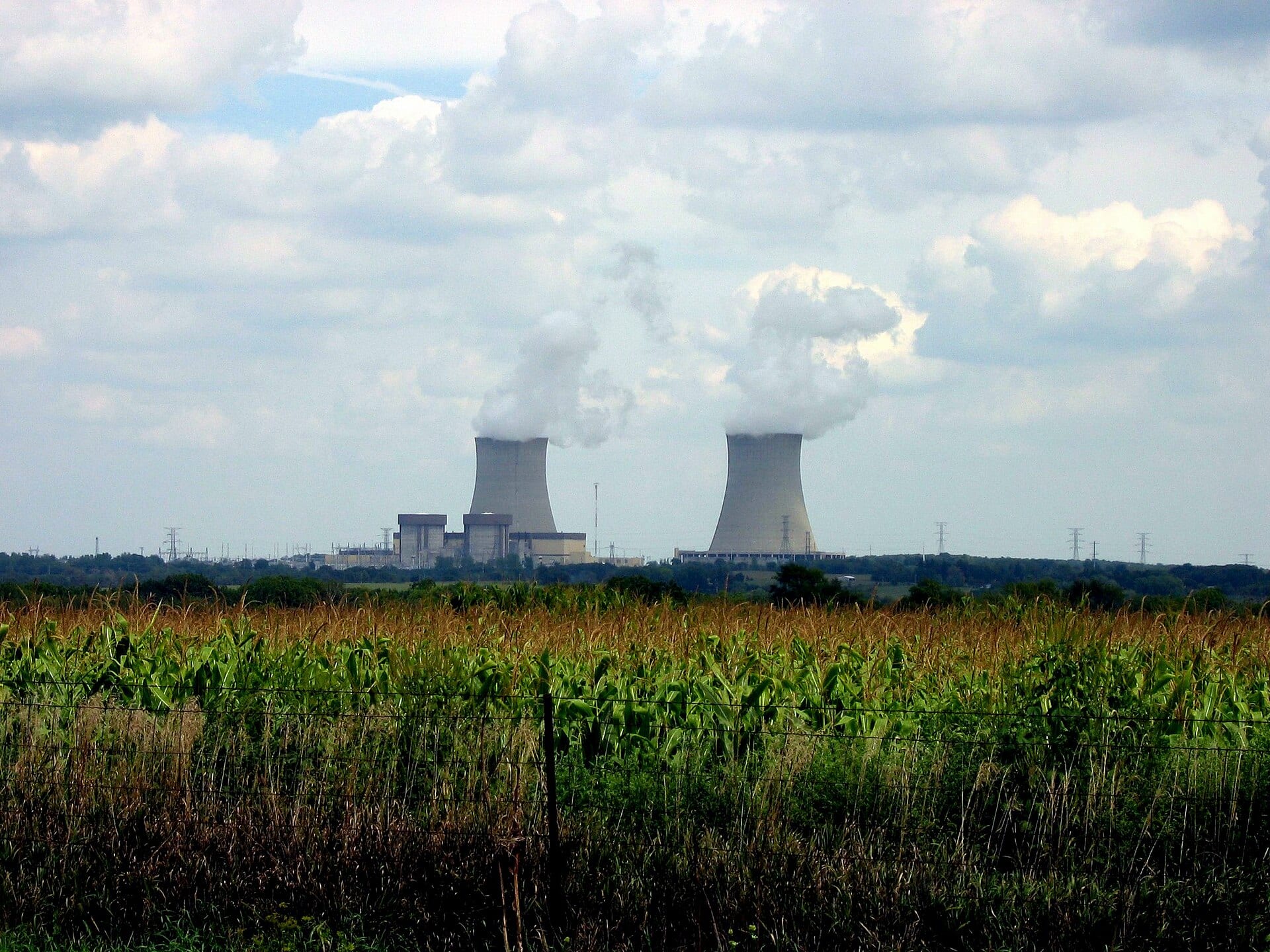
The headline said 3.6 gigawatts of nuclear 1. The paperwork, dated October 6, is two deals: a 20-year power purchase agreement underwriting $4.3 billion of uprates at 11 Constellation−5.73% — Constellation, down 5.73 percent today reactors in three states, worth 890 MW of genuinely new capacity by the end of 2032, and a 15-year agreement on 2,700 MW of output from plants PJM already runs 12. Together: 3,590 MW, and three quarters of it is existing generation 3.
The market paid Constellation on the spot
CEG closed up 12.2 percent, among the S&P 500's top two gainers; Talen added 12.4 percent and Vistra−6.50% — Vistra, down 6.50 percent today 10.7 3. Constellation spends the $4.3 billion and delivers the first uprate in 2028; Google's role is 20 years of certain revenue, at a price neither company discloses 23.
Talen and Vistra rose almost as much as Constellation
Data
| Value | |
|---|---|
| Talen | 12.4% |
| Constellation (CEG) | 12.2% |
| Vistra | 10.7% |
The bigger leg adds no new megawatts
The 15-year leg covers plants already operating: Google buys existing fleet output, a financial structure Constellation says keeps those assets economically viable and their energy and capacity in the PJM market 4. It lands on a grid with no slack. PJM's latest capacity auction cleared at the $325/MW-day cap, the third straight at the cap, and would have cleared above $500/MW-day uncapped 5. Days earlier, FERC froze PJM's 6,831 MW backstop purchase, unconvinced its costs fall on the load driving them 46. PJM itself told regulators that contracting existing capacity to new large loads "would not solve the problem" its new-capacity rules address 4.
Constellation's nuclear book now tops 5 GW
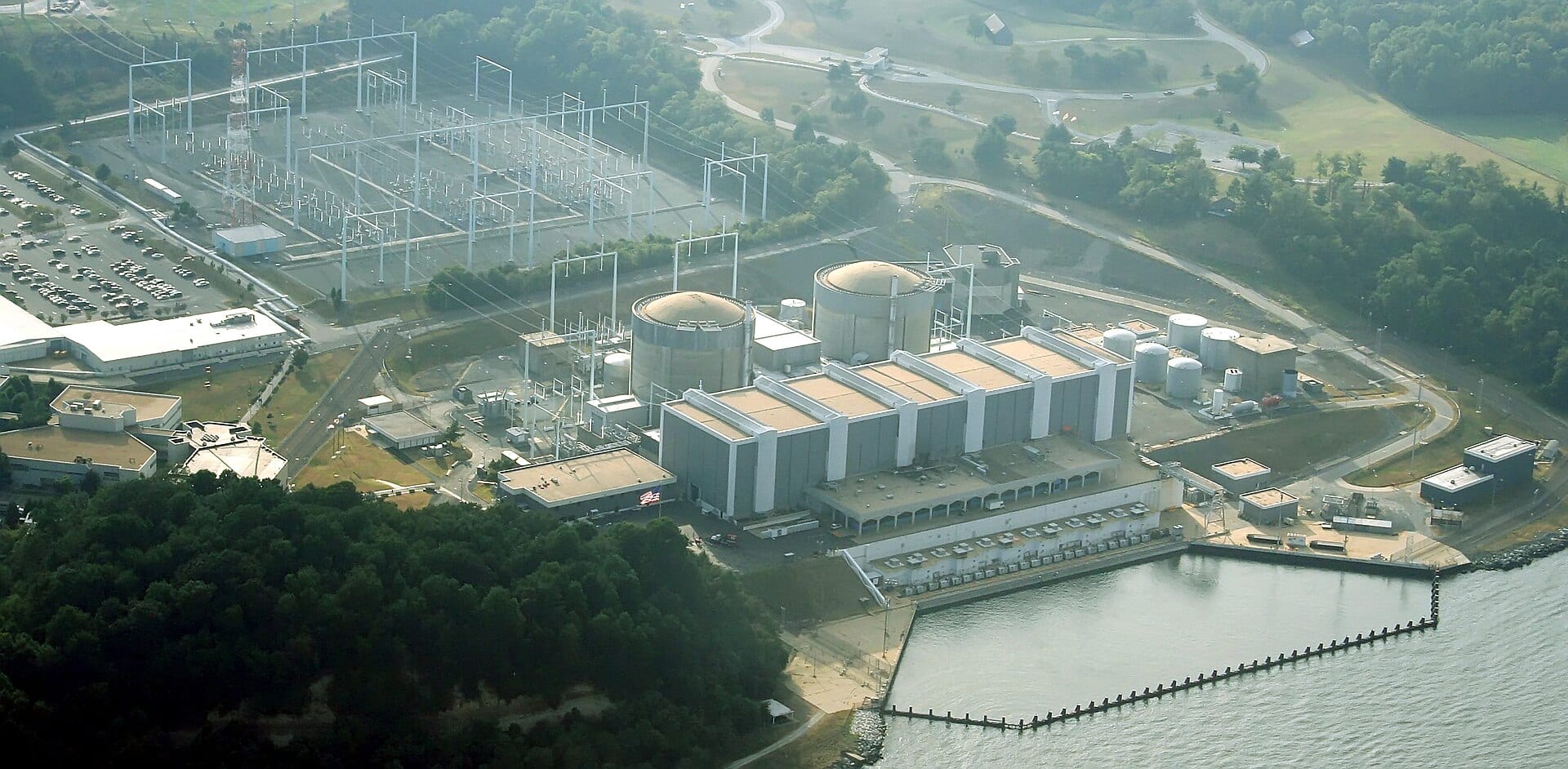
Add the week up: Google's 3,590 MW, Amazon's 690 MW at Calvert Cliffs signed days earlier, and 920 MW of further long-term contracts with investment-grade buyers on the books at Constellation's Q2 filing 47. The hyperscalers pay differently: Amazon's−1.82% — Amazon, down 1.82 percent today package runs above $3 billion for about 190 MW of uprate, over $15 million per megawatt, against roughly $4.8 million for Google's uprates, though Amazon's sum also buys relicensing and 20 more years of operation 27.
Google's 2,700 MW of existing output is the biggest slice of Constellation's nuclear book
Data
| Value | |
|---|---|
| Google: existing output, 15-year | 2,700 MW |
| Other IG buyers, to Q2 2026 | 920 MW |
| Google: uprates, 20-year | 890 MW |
| Amazon: Calvert Cliffs, 20-year | 690 MW |
The companies' answer: nothing leaves the grid
Google says the collaboration adds capacity "at no cost to other ratepayers" 8, and Constellation, as with Amazon, insists no power leaves the PJM grid and nothing runs behind the meter 47. Both hold: the electrons still serve PJM's 67 million people 8. What moves is the offtake, and if firm baseload is spoken for into the 2040s, everyone left bids for what remains. Microsoft−1.41% — Microsoft, down 1.41 percent today already buys Three Mile Island's restart; Meta−0.53% — Meta, down 0.53 percent today holds deals in three states 9.
The regulator sets the price of the rest
PJM wants its Bring Your Own New Capacity rules effective by October 12, and capacity that already cleared an auction generally fails the new-capacity test; neither company says whether the 890 MW qualifies 4. The next capacity auction opens in December, and the backstop returns by February 28, 2027 46. The cheapest megawatt in America is the one that already exists, and Google just bought 15 years of 2,700 of them.
Deepdive
AI-generated from this story and its cited sources. Not investment advice.